


Durban Poison Strain: Africa's Pure Sativa Legend
The Durban Poison strain is the textbook daytime sativa — a pure landrace from the port city of Durban, South Africa, that smells like sweet anise and licorice over pine and earth and hits fast, clear and energetic. It's one of the few true landraces still sold under its own name, and its genes run through modern cannabis: Durban Poison is a parent of Girl Scout Cookies and Cherry Pie, which makes it a grandparent of half the Cookies family. If you want daytime flower that keeps you moving, start with our THCA flower collection.
It's also a strain with more legend than paperwork. The 1970s origin story gets told three different ways, the potency numbers range from 15% to 25%, and the "high-THCV" reputation is bigger than the lab data behind it. Below: what the sources actually say about its history, terpenes and THCV, how the high unfolds, how strong it really is, how it compares to other sativas, how to grow it, and how to judge a bag.
Quick Facts
In short: A pure sativa landrace from the South African port city of Durban — sweet anise and licorice over pine, earth and citrus, a terpinolene-led terpene profile, and a fast, clear, energetic high that made it the textbook daytime strain and a parent of the Cookies family.
| Type | Sativa — Leafly and SeedFinder call it pure, "100% Sativa." See indica vs sativa |
|---|---|
| Origin | South African landrace from around Durban; brought to the US in the 1970s |
| Breeder | None — it's a landrace. Sam the Skunkman stabilized it; Dutch Passion sells the best-known seed line |
| THC | Leafly lists 19%; lab averages run about 18%; databases quote 15–25% |
| Minor cannabinoids | About 1% CBG on Leafly; small but measurable THCV on some lab tests |
| Dominant terpenes | Terpinolene, then ocimene and myrcene |
| Flavor | Sweet anise · licorice · pine · earth · citrus · herbal |
| Best for | Mornings, focus, creative work, outdoor and social time |
| Famous children | GSC, Cherry Pie, White Durban |
| At Diesel Hemp | Our in-stock daytime pick — Strawberry 2.1, from $22 → |
Closest Match In Stock
We don't carry Durban Poison in the shop right now. For the same upbeat, social, sativa-leaning daytime high — though Strawberry 2.1 is a modern fruit hybrid that runs ripe strawberry where Durban Poison runs sweet anise, pine and citrus:

THCA Flower – Strawberry 2.1
From $22.00
Strawberry Guava × OG Kush Breath 2.1 · sativa-leaning hybrid · Third-party lab tested — view COAs · Add a $9 King Size Pre Roll and ship free ($75+)
Shop Strawberry 2.1 →Shop Diesel Hemp
We don't carry Durban Poison. These are our closest in-stock picks for an upbeat daytime high and bright flavor — plus a minty live rosin for concentrate fans.
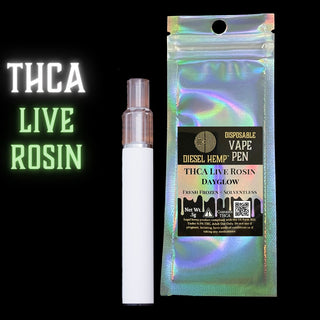
Live Rosin Disposable Vape Pen (.5g) — THCA
From $39.00
SHOP NOW →THCA Flower – Strawberry 2.1
From $34.00 $22.00

THCA Flower – Straw Gua Mintz
From $34.00 $29.00

THCA Flower – Dayglow Mousse
½oz — $69.00
SHOP NOW →
THCA Flower – Lemon Cherry Gelato
½oz — $69.00
SHOP NOW →
THCA Live Rosin – GovernMint Oasis
1g — $49.00
SHOP NOW →Durban Poison Strain Genetics & Origin
- Type: Sativa. Leafly lists it as a sativa; SeedFinder calls it "100% Sativa" and "exclusively inbred, never hybridized." One outlier: The Cannigma tags it "hybrid dominant" in its profile box while calling it a potent sativa in the text.
- Origin: a South African landrace from around the port city of Durban. Leafly's family tree shows a single parent, simply "African."
- Breeder: none — landraces evolve in place rather than being crossed. Sam the Skunkman did the selection work that turned it into a stable seed line, and Dutch Passion's Durban Poison is the version SeedFinder lists.
- THC: 19% on Leafly; about 17.8% averaged across lab data for products sold as Durban Poison, per The Cannigma; 24% on AllBud; 16–25% on SeedFinder.
- CBD and CBG: CBD is negligible. Leafly lists about 1% CBG; The Cannigma's lab average shows 0.8–0.9% CBG and 0.6% CBD.
- Other names: PAX lists Purple Durban, Durban Poison Autoflower and "517 Durban Poison" as names you'll see on menus.
How Durban Poison got to the US — three versions of the story
Everyone agrees on the outline: South African seeds reached California in the 1970s and became a Dutch seed classic by the 1980s. The details depend on who's telling it.
- The Rosenthal–Frank version. Cannabis author Ed Rosenthal brought South African seeds back to the US and passed them to grower-author Mel Frank, who passed some to Sam the Skunkman. GreenState adds that Rosenthal first tried the strain at the Transvaal, an Amsterdam shop run by South Africans who imported their own cannabis. The Cannigma calls this the common story, not a verified one.
- Sam the Skunkman's own version. In a 2007 forum post quoted by The Cannigma, Sam wrote that "South African Durban Poison was first introduced by me." He said he started from about 100 seeds in late-1970s California — most were hermaphrodites with small calyxes and "not so great buds" — and he bred those faults out before launching it in Amsterdam by the early 1980s.
- The two-line version. Weedmaps says Mel Frank selected the population into an "A-line," which became American Durban Poison, and a "B-line" that went to Sam and into Dutch breeding — including, it says, Skunk #1. We'd treat the Skunk #1 link with caution: the usual Skunk #1 pedigree is Colombian × Acapulco Gold × Afghani, with no Durban in it.
Weedmaps itself notes that decades of retelling have blurred the handoffs. What's consistent across every version: the wild seed was unstable and intersex-prone, and the plant people smoke today is the result of years of selection for resin, early finishing and female plants.
Why is it called "Poison"?
The "Durban" part is easy — the port city on South Africa's east coast. Nobody we found documents where "Poison" came from. The usual guess is that it's tongue-in-cheek slang for something unusually potent, but that's folklore, not a sourced fact. There's nothing toxic about it.
What strains come from Durban Poison?
Durban Poison's biggest legacy is as a parent. SeedFinder counts 81 direct descendants. The famous ones:
- GSC (Girl Scout Cookies) — OG Kush × Durban Poison, per The Cannigma. GSC went on to found the Cookies family, so Durban sits behind Thin Mints, Platinum Cookies and many more. Leafly lists Platinum Cookies and Key Lime Pie as children.
- Cherry Pie — Granddaddy Purple × Durban Poison.
- White Durban — White Fire OG × Durban Poison.
- Others on SeedFinder: Madcow (× Purple Cow), Sour Poison, Durban Cookiez, Chunky Cookies, Poison Toad and Durban the Dog. PAX adds Durban Nights, Durban Dream and Durban Haze.
Durban Poison Terpene Profile
Durban Poison is one of the classic terpinolene strains. Leafly names terpinolene as the dominant terpene, with myrcene and ocimene behind it. The Cannigma's averaged lab data puts rough numbers on it: about 1% terpinolene, 0.5% ocimene, 0.2% myrcene and 0.1% caryophyllene. Terpinolene is unusual. Most modern hybrids lead with myrcene, caryophyllene or limonene, which is a big part of why Durban smells nothing like a dessert strain.
Batches vary a lot. One Oregon grower's test cited by GreenState showed terpinolene well ahead of ocimene and myrcene, while a Washington batch on another lab platform led with caryophyllene and humulene. Terpene testing isn't standardized, and growing conditions matter. Cannabis makes well over 100 terpenes — see this 2016 review of cannabis chemistry — so treat any single profile as one batch, not the strain.
Terpene Profile — Relative Intensity
Terpinolene — fresh, piney, floral, faintly anise
Ocimene — sweet, green, herbal
Myrcene — earthy depth
Caryophyllene — pepper and spice
Relative scale based on The Cannigma's averaged lab data for Durban Poison products (~1% terpinolene, 0.5% ocimene, 0.2% myrcene, 0.1% caryophyllene). Individual batches vary widely.
- Terpinolene: The fresh, piney, slightly floral top note — and the reason Durban sits in the same smell family as Jack Herer and Ghost Train Haze. The Cannigma notes that THC plus terpinolene is the combination people tend to associate with "sativa" effects.
- Ocimene: Sweet, green and herbal. With terpinolene, it's the likely source of the anise-and-licorice sweetness people mention so often.
- Myrcene: Present but low, so you get earthy depth without the heavy "couch" reputation myrcene-dominant strains carry.
- Caryophyllene: A small amount of pepper and spice. It's the terpene with the most research interest — a 2008 PNAS study identified beta-caryophyllene as a "dietary cannabinoid" that binds CB2 receptors.
Does Durban Poison really have high THCV?
THCV is the minor cannabinoid people link with African sativas, and Durban Poison is the strain most often named. The data is thinner than the reputation. GreenState says three cultivators' lab results show "noteworthy" THCV. an SC Labs test of a Durban Poison badder found 0.5% THCVA next to 80.2% THCA — measurable, but a small fraction of the THC. Leafly and The Cannigma don't list THCV at all. Our take: some Durban batches carry real THCV, more than most modern hybrids, but don't buy any Durban Poison expecting a THCV dose unless its COA shows one.
Appearance
Durban Poison doesn't look like a typical sativa. PAX describes compact, round, chunky buds in medium green with orange pistils — not the loose, foxtailed spears you'd expect from a tall equatorial plant. AllBud also calls the buds "round and chunky, with a dense coating of trichomes." Weedmaps agrees the flowers can be denser than a typical sativa's. SeedFinder describes large, long, resinous buds, so phenotypes vary. The constant is the resin: a heavy, sugary frost, which is why Leafly notes the strain is often used for concentrates.
Aroma and Flavor
Break up a Durban bud and the first thing most people notice is sweet anise or black licorice — the strain's signature. Under that sits pine, earth and a sharp, herbal-spicy edge. Dutch Passion describes the flavor as "spicy and hazy" with hints of aniseed, liquorice, lemon and cloves. Leafly's top flavors are pine, earthy and sage; Weedmaps' flavor reports split roughly evenly between earthy, woody and spicy-herbal. AllBud lists citrus, herbal, pine and sweet, with earthy, pungent and spicy aromas. PAX adds apple and mint, and GreenState describes lemon and pine with a minty finish.
On the inhale it's sweet and herbal; on the exhale the pine and spice take over. Older or poorly cured Durban loses the sweet anise first and turns flat and hay-like, so a strong licorice note is a good freshness sign.
Recreational Effects
Durban Poison is the textbook wake-up strain. On Leafly, with about 3,800 ratings and a 4.4 average, the top effects are:
- Energetic: the headline. People reach for it to start the day, run errands or get outside.
- Focused: a clear, task-friendly head. One Leafly reviewer calls it a "strong but very clean head high."
- Uplifted: quick mood lift — "an instant change in my mental state," as another reviewer puts it.
- Creative and talkative: AllBud lists creative, euphoric, focused and happy; PAX adds giggly, excited and deep-thinking.
- Light body: mostly cerebral, with little body weight. Some people report a buzzing or tingling feeling (PAX).
How the high unfolds: onset, peak and duration
- First 1–5 minutes: a fast, bright cerebral lift — this one comes on quickly when smoked.
- 15–60 minutes: the peak — alert, focused, chatty and motivated.
- 1–3 hours: a gradual taper. Dutch Passion calls the high relatively long-lasting, and notes that larger amounts can bring a more sedative turn.
The catch with any racy sativa: too much can tip from energized to jittery. PAX notes some people get jittery with heavy use. Start small, especially if strong stimulation isn't your thing.

Rolling up a Durban Poison morning joint.
→ Experience it yourself — shop Diesel Hemp's THCA Flower
How Strong Is Durban Poison?
Durban Poison is moderately strong — its reputation comes from how fast and clear it hits, not from record-breaking THC. The published numbers:
- Leafly: 19% THC and 1% CBG.
- The Cannigma: 17.8% THC, averaged from lab data on products sold as Durban Poison.
- AllBud: up to 24% THC.
- SeedFinder / Weedmaps: 16–25% and 15–25%.
- High Times: 15–22%.
Realistically, a well-grown cut lands in the high teens to low 20s. GreenState says it "generally tests over 20 percent," but averaged data runs a bit lower. Concentrates are a different animal — PAX notes Durban concentrates can reach 80% THC, and SC Labs' badder test showed 80.2% THCA — so dose those far more carefully than flower.
THCA flower is labeled differently from dispensary flower: the lab reports THCA, which converts to THC when heated, plus a small amount of delta-9 THC. When you compare a batch of Durban Poison against the 15–25% range above, compare total THC on the COA, not the headline number — our guide on how to read a THCA flower COA walks through the math.
Is Durban Poison a Landrace? Why It Still Matters
Yes — and that's rare. A landrace is a variety that adapted to one region over generations, rather than being crossed by a breeder. Most "landrace" names on today's menus are long-hybridized, but Durban Poison has been kept as an inbred line, which is why SeedFinder's "never hybridized" note matters. Its neighbors in the classic-sativa hall of fame include Acapulco Gold, Panama Red and Maui Wowie.
For breeders, Durban brought early finishing — unusual for a sativa — plus heavy resin and an unusual terpinolene nose. That combination is how it ended up in GSC, and through GSC in a huge share of modern hybrids. Pop culture noticed too: PAX says several songs are named after it and that it inspired the title of a 2013 South African film.
Awards: what we could and couldn't confirm
Durban Poison is widely called an award winner, but the specifics don't line up. Weedmaps lists 2nd place in the Medical Sativa category at the Denver High Times Cannabis Cup in 2013 and 2014. GreenState says it won Best Sativa at the High Times Cup "by 2010." Dutch Passion's own page lists no award for the strain. We couldn't confirm either claim against official results, so treat them as reported, not verified.
Durban Poison vs Similar Strains
- vs Green Crack: the other famous "get things done" sativa. Green Crack runs fruitier and mango-sweet; Durban is more anise, pine and herbal, with a cleaner, less wired edge for many people.
- vs Jack Herer: a terpinolene cousin. Jack is a Haze hybrid with more spice and pine and a slightly more rounded body; Durban is the purer, brighter sativa.
- vs Super Lemon Haze: both energizing, but Super Lemon Haze is all zesty lemon, where Durban is licorice-sweet.
- vs Ghost Train Haze: much more potent and racier — a better fit for high-tolerance sativa fans than for beginners.
- vs GSC and Cherry Pie: its children. Both mixed Durban with indica-leaning parents, so they're sweeter, more dessert-like and more relaxing than Durban's straight energy.
- vs Strawberry 2.1: our featured in-stock pick, and honestly not a twin. It's a modern sativa-leaning hybrid with an upbeat, social daytime high, but it runs ripe strawberry with a faint gas finish instead of anise and pine. For a minty, herbal edge closer to Durban's nose, try Straw Gua Mintz.
Who Durban Poison Is (and Isn't) For
Good fit: morning and daytime smokers, people who want focus and motivation instead of sedation, creative work, hikes and outdoor time, social sessions, and anyone curious about a true landrace.
Poor fit: anyone looking for sleep or pain-and-couch relief, and people prone to THC anxiety or a racing heart — "anxious" is one of Leafly's top-reported negatives. For an upbeat, easygoing daytime flower on our shelf, Strawberry 2.1 is the pick, from $22.
How to Use Durban Poison THCA Flower — and How Much
THCA has to be heated to do anything. Raw, it isn't intoxicating; heat converts it to THC (decarboxylation), which is why the method matters as much as the strain.
- Smoking (joint, pipe, bong): the fastest onset. Take one or two small hits, then wait 10–15 minutes before deciding on more.
- Dry-herb vaporizer: a good way to taste the anise and pine. Terpinolene is volatile, so lower temperatures — around 340–375°F — keep the sweet, fresh top notes; 390–410°F brings out more spice and a stronger effect.
- Pre-rolls: the no-prep option — see our THCA pre-rolls.
- Homemade edibles: decarb the flower first. Edibles take 30–120 minutes to kick in and last far longer, so start low and wait the full two hours.
How much? New or occasional users: one small puff, then wait 15 minutes — Durban comes on fast and can feel racy if you stack hits. Regular users usually find two or three hits gives the full energetic arc. Avoid it late in the evening if you want to sleep. You can always add more; you can't take it back.
Medicinal Benefits
These are uses consumers report on Leafly and AllBud, not established clinical outcomes. Individual response varies with dose, tolerance and chemotype.
- Stress: the most-cited reason on Leafly, from about 30% of reviewers.
- Low mood and depression: about 28% of Leafly reviewers, consistent with the uplifting headline effect.
- Anxiety: about 25% of reviewers — but "anxious" is also a top negative, so this one depends on dose and person.
- Fatigue and focus: AllBud lists fatigue and ADD/ADHD; that's in line with the energetic, focused reviews, but there's no clinical data on Durban for either.
- Nausea, headaches and pain: also on AllBud's list. The Cannigma speculates about other uses but cites no clinical source.
For a plain-language primer on how terpenes are thought to shape these effects, see Project CBD on terpenes. Nothing here is medical advice, and nothing on this page is intended to diagnose, treat, cure or prevent any disease. If you take prescription medication or have a health condition, talk to your doctor before using any cannabis product.
Side Effects and Cautions
- Dry mouth and dry eyes — the most common complaints on Leafly.
- Anxiety, paranoia or jitteriness — the main risk with a fast, racy sativa, especially at high doses or low tolerance (Leafly, The Cannigma, PAX).
- Racing thoughts at night — it's energizing, so it can get in the way of sleep.
Does Durban Poison make you sleepy? Usually the opposite — though Dutch Passion notes very large amounts can turn more sedative. Don't drive after using it, and talk to your doctor first if you take prescription medication, are pregnant or nursing, or have a heart condition.
Is Durban Poison Top Shelf? How to Judge a Good Bag
- Anise or licorice on the nose. That sweet, herbal licorice note is Durban's fingerprint. Generic earthy flower labeled "Durban" is old, mislabeled or a different cut.
- A current third-party COA naming the lab, with THCA, delta-9 and total THC — and THCV if the seller is marketing it. Treat 30%+ claims without paperwork as marketing. Ours are on the lab results page.
- Terpinolene near the top of the terpene panel, if the COA lists terpenes.
- Dense, frosty buds. Durban's buds are chunkier than most sativas'; a heavy sugary trichome coat is normal.
- A proper cure — hay or grass smell means it was rushed, and it will taste flat.
Growing Durban Poison
Durban Poison is one of the more grower-friendly sativas, though sources disagree on just how easy. Leafly rates it easy with a high yield; High Times calls it moderate.
- Flowering: about 8–9 weeks indoors per Dutch Passion (about 60 days on SeedFinder; 7–9 weeks on Leafly; 8–10 weeks on High Times). That's fast for a sativa — a trait Sam the Skunkman selected for.
- Outdoor harvest: end of September per SeedFinder; early-to-mid autumn per Dutch Passion.
- Height: tall. Dutch Passion says outdoor plants can reach 3–4 meters, and indoor plants often double or triple in size once flowering starts; The Cannigma says outdoor plants can top 8 feet. Top early, use low-stress training, and trellis.
- Yield: 450–650 g/m² per Dutch Passion; The Cannigma lists about 1 lb per plant outdoors and 1.2 oz per square foot indoors.
- Climate and care: it thrives in full sun and warm weather — The Cannigma gives 65–85°F and calls it mold- and disease-resistant. PAX says it prefers lighter feeding and recommends pruning so light reaches the lower buds.
- Seeds: Dutch Passion sells regular and feminized seeds, and autoflower versions exist.
Is Durban Poison THCA Flower Legal?
Under the 2018 Farm Bill, hemp is federally legal when it contains no more than 0.3% delta-9 THC on a dry-weight basis — see the USDA hemp program. THCA flower is sold under that rule. State laws differ and are changing, so check your state before you order. And whatever the label says, THCA flower will show up on a drug test — heated, it is THC.
Why Buy From Diesel Hemp
- Third-party lab tested — published COAs for our flower on the lab results page
- Grown in Colorado by Diesel Hemp and partner farms — hand-trimmed, slow-cured, shipped fresh
- Federally compliant — under 0.3% delta-9 THC per the 2018 Farm Bill
- Ships direct in discreet packaging — free shipping on orders over $75
- Veterans discount program — proud to support those who served — apply here
Shipping & Legality
Is it legal to ship THCA flower to my state?
In its raw form our flower contains less than 0.3% delta-9 THC, making it federally compliant under the 2018 Farm Bill. Some states restrict high-THCA hemp products — check your local laws before ordering.
How does shipping work?
Orders ship direct in discreet packaging with tracking. Free shipping on orders over $75 — a ½oz plus a $9 King Size Pre Roll gets you there.
Questions about your order?
Call 833-375-3835 or email info@dieselhemp.com — real humans in Colorado.
Shop Premium Flower at Diesel Hemp
- Strawberry 2.1 THCA Flower — our featured daytime pick — an upbeat, social, sativa-leaning high, from $22.
- THCA Flower — the full lineup, grown in Colorado by Diesel Hemp and partner farms.
- THCA Pre-Rolls — the same flower, pre-rolled.
- THCA Small Buds — same genetics, smaller nugs, better price per gram.
- What THCA flower actually is — the encyclopedia explainer.
Frequently Asked Questions
Is Durban Poison indica or sativa?
Durban Poison is a sativa — and a pure one. Leafly lists it as a sativa, and SeedFinder calls Dutch Passion's line '100% Sativa,' inbred and never hybridized. It's a South African landrace.
Where does Durban Poison come from?
It's a landrace from around the port city of Durban, South Africa. Seeds reached California in the 1970s — credited to Ed Rosenthal, Mel Frank and Sam the Skunkman in different tellings — and it became a Dutch seed classic by the early 1980s.
How strong is Durban Poison?
Leafly lists 19% THC and lab averages run about 18%, with databases quoting 15–25%. It's moderately strong; its reputation comes from how fast and clear it hits rather than raw THC.
What does Durban Poison feel like?
Fast, clear and energetic. Leafly reviewers report focused, energetic and uplifted effects with little body weight. Too much can feel jittery.
What does Durban Poison taste like?
Sweet anise and black licorice over pine, earth and herbs, with citrus and spice. Dutch Passion describes aniseed, liquorice, lemon and cloves.
What terpenes are in Durban Poison?
Terpinolene leads, followed by ocimene and myrcene, with a little caryophyllene. The Cannigma's averaged lab data puts terpinolene around 1% and ocimene around 0.5%.
Does Durban Poison have THCV?
Some batches do. An SC Labs test of a Durban Poison badder showed 0.5% THCVA, and GreenState cites cultivator tests with noteworthy THCV. Leafly doesn't list it, so check the COA rather than assuming.
What strains come from Durban Poison?
Its most famous child is GSC (Girl Scout Cookies), an OG Kush × Durban Poison cross. Cherry Pie (Granddaddy Purple × Durban Poison) and White Durban (White Fire OG × Durban Poison) also carry it, and SeedFinder counts 81 direct descendants.
Is Durban Poison good for anxiety?
It's mixed. About 25% of Leafly reviewers say it helps with anxiety, but 'anxious' is also a top negative. As a fast, energizing sativa, it's best in small doses for anxiety-prone people.
Is Durban Poison good for sleep?
Usually not. It's energizing and cerebral, so most people use it in the morning or afternoon. Dutch Passion notes very large amounts can turn more sedative.
Is Durban Poison good for beginners?
It can be, in small doses — THC is moderate and the high is clear. Because it comes on fast and can feel racy, take one small puff and wait 15 minutes before more.
Why is it called Durban Poison?
Durban is the South African port city it comes from. We couldn't find a documented origin for 'Poison' — it's usually explained as slang for something potent, and there's nothing toxic about it.
How long does Durban Poison take to flower?
About 8–9 weeks indoors per Dutch Passion, or about 60 days per SeedFinder. Outdoors it's ready around the end of September in the Northern Hemisphere.
Where can I buy Durban Poison THCA flower online?
Durban Poison isn't in the Diesel Hemp shop right now. Our closest everyday pick is Strawberry 2.1 THCA Flower — an upbeat, social, sativa-leaning high from $22, third-party lab tested. It runs strawberry rather than anise, so for a minty, herbal edge try Straw Gua Mintz. Add a pre-roll to ship free over $75.
Upbeat, sativa-leaning daytime pick in stock · from $22 · free shipping over $75
Related Strains
- Limoncello — The Original Lemonnade × Cherry Pie.
- Cherry Limeade — Cherry Pie × Black Lime Reserve.
- GSC (Girl Scout Cookies) — Durban Poison's most famous child, crossed with OG Kush.
- Cherry Pie — Granddaddy Purple × Durban Poison.
- White Durban — White Fire OG × Durban Poison.
- Platinum Cookies — a Cookies-family descendant Leafly links to Durban.
- Green Crack — the other classic get-things-done sativa.
- Jack Herer — a terpinolene-forward sativa cousin.
- Acapulco Gold — another legendary landrace-era sativa.
- Ghost Train Haze — a more potent, racier terpinolene sativa.
- Strawberry 2.1 — our upbeat, sativa-leaning in-stock pick.
- Browse the Full Diesel Hemp Encyclopedia


